

Original author: Eric Droblyen on September 16th, 2020
Edited for clarity and brevity: Gleba & Associates
Original: https://www.employeefiduciary.com/blog/small-business-401k-tax-credits
On December 20, 2019, the Setting Every Community Up for Retirement Enhancement (SECURE) Act was signed into law. The legislation made many significant retirement plan changes, including enhanced tax credits for small businesses that start a new plan and/or add an automatic enrollment feature to any plan. For most small businesses, these changes took effect January 1, 2020.
Since the SECURE Act became law, we’ve received lots of questions from small business owners about the new tax credits. Below is a FAQ with answers to the most common questions.
What retirement plans qualify for the SECURE Act tax credits?
401(k) plans, Simplified Employee Pensions (SEPs), and Savings Incentive Match Plan for Employees (SIMPLE) IRAs qualify. 403(b) plans do not.
What are the new SECURE Act 401(k) tax credits?
The SECURE Act permits an eligible small business to claim a tax credit for adopting a new 401(k) plan and/or a new automatic enrollment feature.
- Qualified startup costs – Before the SECURE Act, a small business could claim a tax credit equal to 50% of their “qualified startup costs,” up to a $500 limit. Now, the limit is the greater of (1) $500 or (2) the lesser of (a) $250 multiplied by the number of non-Highly Compensated Employees (non-HCEs) eligible for plan participation or (b) $5,000. This credit is available for up to three years.
- Automatic enrollment – Small businesses can earn an additional $500 tax credit by adding an automatic enrollment feature to a new or existing 401(k) plan. The credit is available for each of the first three years the feature is effective.
When combined, these credits can total up to $5,500 per year ($16,500 for 3 years).
What are “qualified startup costs?”
“Qualified startup costs” include the ordinary and necessary costs that a small business incurs to:
- Set up and administer a qualifying retirement plan, and
- Educate employees about the plan.
Is my small business eligible for a SECURE Act 401(k) tax credit?
To be eligible, you must meet 3 requirements:
- Have 100 or fewer employees who were paid at least $5,000 in compensation by you in the preceding year;
- Cover at least one non-HCE with your retirement plan; and
- In the 3 tax years before the first year you’re eligible for the credit, your employees weren’t substantially the same employees who received contributions or accrued benefits in another retirement plan sponsored by you, a member of a controlled group that includes you, or a predecessor of either.
What is a non-Highly Compensated Employee?
A non-Highly Compensated Employee (non-HCE) is a plan participant that’s not considered a Highly Compensated Employee (HCE) by the Internal Revenue Service (IRS). The IRS defines an HCE as an individual who:
- Owned more than 5% of the interest in the business at any time during the current or preceding year, regardless of how much compensation that person earned or received, or
- For the preceding year, received compensation from the business of more than $125,000 (if the preceding year is 2019 and $130,000 if the preceding year is 2020), and, if the employer so chooses, was in the top 20% of employees when ranked by compensation.
How can I claim the startup tax credit?
You must file IRS Form 8881 (Credit for Small Employer Pension Plan Startup Costs) with your tax return. This form has not yet been amended to accommodate the new SECURE Act tax credits.
Can adding 401(k) feature to a profit sharing plan qualify for the startup tax credit?
No.
Can a solo 401(k) plan qualify for the SECURE Act tax credits?
No because solo 401(k) plans do not cover non-HCEs. They can only cover business owners and their spouses.
Must the automatic enrollment feature meet any requirements to qualify for the $500 tax credit?
Yes, the feature must meet Eligible Automatic Contribution Arrangement (EACA) requirements.
A QACA safe harbor 401(k) plan will meet EACA requirements.
Does automatic enrollment add special administration responsibilities to a 401(k) plan?
Yes. Automatic enrollment adds two major administration responsibilities to a 401(k) plan:
- Distributing an annual notice to eligible employees that explains the feature, including the employee’s right to make their own deferral election.
- Withholding wages from automatically enrolled participants at the plan’s default deferral rate.
If the automatic enrollment feature includes an escalating default rate (commonly called an “escalator”), the employer must also remember to increase the default deferral rate for automatically enrolled employees each year.
These additional responsibilities are not particularly onerous, but making a mistake can be costly and time-consuming to fix.
How much can the tax credits reduce the cost of a new 401(k) plan?
The SECURE Act tax credits can dramatically reduce the cost of starting a new 401(k) plan. Below is an example of the possible savings. To calculate the potential savings for your small business, give us a call or send us an email and we can send over an excel document calculator. Please reach out to your CPA for more details.
| 2020 | 2021 | 2022 | |
|---|---|---|---|
| Automatic Enrollment? (Yes or No) |
Yes | Yes | Yes |
| Number of Non-HCEs | 10 | 20 | 30 |
| Setup and Admin Fees (Paid by company) |
$2,000.00 | $3,000.00 | $4,000.00 |
| Startup Credit | ($1,000.00) | ($1,500.00) | ($2,000.00) |
| Automatic Enrollment Credit | ($500.00) | ($500.00) | ($500.00) |
| Tax-Deductible Setup and Admin Fees |
$500.00 | $1,000.00 | $1,500.00 |
The SECURE Act tax credits make it cheaper than ever to start a new 401(k) plan!
Approximately 80% of our small business clients pay their 401(k) administration fees from a corporate bank account – not plan assets. This high rate is hardly surprising when you consider the approach is usually a win-win for the business owner. They can deduct the fees as a business expense, while keeping the portion that would been paid from their personal 401(k) account working for them until retirement.
The SECURE Act made this approach even more attractive by increasing the tax credits a small business owner can claim by starting a new plan – lowering the plan’s out-of-pocket cost for up to 3 years.





 Invest Well. Manage Well. Live Well.
 Gary is a Financial Associate at Gleba & Associates, Inc., joining our team in June 2020. After graduating from Walsh College with a Bachelor’s Degree in Finance in 2013, he began his career at Raymond James Financial Services. He then moved to the world of banking, working as a banker with Chase Private Client and then as an Assistant Vice President, Financial Advisor with PNC Investments. Gary has expertise in all aspects of financial planning including investment management, higher education planning, life insurance, and long-term care insurance needs analysis. When he gets away from the office, he loves to spend time with his wife, Lauren, and two daughters, Hadley and Harper. He enjoys woodworking, boating, summer weekends at the family cottage, spending time outdoors and traveling.
 Conor is a Financial Associate at Gleba & Associates, Inc., where he started in 2018. Conor has prior experience in the financial planning industry, as well as in the insurance industry. His high level of understanding insurance and financial products helps him in assessing the needs of our clients. He holds a Bachelor of Science degree in Business Administration with a concentration in Finance from the University of Detroit Mercy. You can often find Conor playing soccer or walking with his two dogs Milo, and Ellie. He is also an avid follower of the Detroit Tigers, Detroit Red Wings and his alma mater, the University of Detroit Mercy Titans.
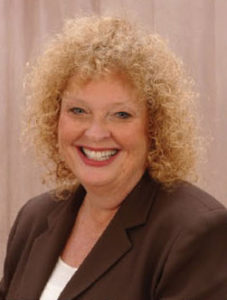 Lorie Heitzer is our Financial Associate at Gleba & Associates, Inc., where she has been a valuable employee for more than a decade! In her current role, Lorie assists with client reviews, implements client financial planning, and handles preparation of investment paperwork. During her time with Gleba & Associates, Lorie has earned her Series 6 (Investment Company Variable Contracts Representative), 63 (Uniform Securities Agent) and Life Insurance Licenses, allowing her to move into her current role where she assists clients in both of these areas. Lorie and her husband Bill, along with their daughters Lauren and Alexandria, and sons-in-law, Andrew & Joe, enjoy golf and make it a family event whenever possible. Her tenure at Gleba & Associates speaks volumes to her passion for the firm’s family atmosphere and her dedication to our clients and their financial and insurance needs.
 Terri is the Service Manager at Gleba & Associates, Inc., Joining the team in April, 2015. In her role, she handles client service requests and underwriting. Terri’s previous experience in 401(k) Retirement Plans, Payroll and Human Resource Administration is invaluable, allowing Gleba & Associates to grow and run efficiently. This is knowledge that can also assist our small business clients as they grow their businesses. Terri enjoys spending time with family, which includes her husband, Gerry and her two children, Vincent and Genna. She loves the outdoors and camping with family in their RV. Terri looks forward to continuing the high level of customer service you have come to expect from Gleba & Associates!
 Michael is the Marketing Manager at Gleba & Associates, Inc., where he began in August 2017. In his position, Michael creates and develops marketing strategies to enhance the image of Gleba & Associates, and helps maximize the Client-Advisor relationship. He is also in charge of company events, seminars, and educational workshops. Michael has a Bachelor of Applied Arts Degree in Integrative Public Relations from Central Michigan University. When he is not in the office, Michael can most likely be found playing billiards, playing poker, on the tennis court, or rooting on the Utica Unicorns baseball team. Michael stays active by going to the gym and going to the dog park with his Labrador-mix, Milton. His approachable attitude, along with experience in marketing, communications, and social media, makes him a valuable asset to the Gleba & Associates team.
 Moiz is our Financial Associate at Gleba & Associates, Inc., where he began in 2013 after working for Bank of America and Thomson Reuters in various financial roles. In his position, Moiz assists in the research of financial solutions in order to meet client’s needs, conducts client reviews, provides insurance quotes, offers detailed financial plans, and delivers follow-up services to our clients. Before moving to the United States in 2004, Moiz grew up in rural India, where he was raised in a family of entrepreneurs. This allowed him to quickly learn the value of financial investment. Moiz holds a Bachelor of Commerce Degree in Accounting from Gujrat University and a B.B.A. in Management and an MBA from Walsh College of Accountancy and Business Administration, where he was elected as a member of Delta Mu Delta, the International Honor Society in Business Administration in recognition of high scholastic attainment. Moiz enjoys spending time with his wife, Tasneem, son, Taha, and family. He also loves playing tennis and rebuilding computers. His expertise in the areas of banking, mortgage and taxation helps to provide our clients with distinct portfolio advice as well as overall financial direction and growth.