

Originally By Rodney Brooks, US News Money, March 19, 2021
Edited for clarity and brevity by Gleba & Associates
Low tax rates provide strong incentives for Roth IRA conversions.
The impact of the pandemic along with low tax rates makes 2021 an opportune time to convert a traditional individual retirement account into a Roth IRA. But a Roth IRA conversion may not be the right financial move for everyone.
A Roth IRA conversion makes sense when:
- Taxes are low.
- Your income is reduced.
- You have the money to pay the taxes that become due.
- You don’t want to leave heirs a big tax bill.
With a traditional IRA, you don’t pay taxes on the money you deposit, but withdrawals are taxed as ordinary income. With a Roth, you deposit money on which you’ve already paid taxes, so the money you withdraw in retirement is not taxable. A Roth IRA conversion means you pay tax on your savings in the year you move your money from the traditional retirement account to the Roth in order to set up tax-free income later in life. Your Roth distributions will eventually be a tax-free source of retirement income. If you convert to a Roth IRA in a year when you pay an unusually low tax rate, you can avoid getting hit with higher taxes when you take distributions in retirement.
Low Tax Rates
Historically low tax rates make 2021 a great time to convert your traditional IRA to a Roth account. “It’s the best time in history to convert to a Roth,” says Elijah Kovar, co-founder of Great Waters Financial in Minneapolis. “Between now and 2025, the last year of tax reform, taxes are on sale.”
When you convert to a Roth IRA you pay the taxes now at your current tax rate so you don’t have to pay a higher tax rate in retirement. You can also convert part of your retirement savings and maintain both pre- and post-tax retirement accounts. “A Roth conversion is arguably a powerful tax diversification tool for financial planning,” says Matt Sadowsky, director of retirement and annuities at TD Ameritrade. “The current environment makes it even more attractive to those considering a Roth conversion as part of their financial plan.”
Many people put money in a traditional IRA or 401(k), defer taxes and plan to take distributions in retirement while in a lower tax bracket, but not everyone pays a lower tax rate in retirement. “That is not true for anybody who has saved a significant amount of money,” Kovar says. “Clients many times end up in a higher tax bracket. Between Social Security, pensions and required minimum distributions, people often remain in the same tax bracket they were in before they retired or are pushed into a higher one.” If you need to take large withdrawals from a traditional retirement account in retirement, you could even be pushed into a higher tax bracket, which could have unexpected consequences. For example, Medicare beneficiaries could face higher premiums because Medicare premiums are based on your income.
Reduced Income Results in a Lower Tax Bracket
Many Americans have experienced job loss, pay cuts, furloughs and early retirements. This means that incomes will be lower for many Americans, making a Roth conversion more attractive. “Income arguably will be much less this year as the result of layoffs and the economy materially contracting,” Sadowsky says.
You need to pay income tax on a Roth IRA conversion at your current tax rate. If you drop into a lower tax bracket due to a lower income, you will pay less income tax on the amount you convert. Consider a married couple who expected to make $100,000 this year, but one spouse was furloughed due to the coronavirus crisis, and as a result their taxable income drops to $70,000. The couple has effectively dropped from the 22% tax bracket to the 12% bracket. “They could do a $10,000 Roth conversion and only pay 12% when they are normally in the 22% bracket because their income is $30,000 lower,” Kovar says.
You Have the Money to Pay the Taxes
While it can make sense to initiate a Roth IRA conversion when your income is down and you are perhaps in a lower tax bracket, a period of unemployment may not be the optimum time to do a Roth conversion if you don’t have enough cash on hand to pay the taxes that will be due on the amount you convert. “You have to have money to pay for the income taxes,” said Eric Bond, a wealth advisor and president of Bond Wealth Management in Long Beach, California. “You really need to spend time with a tax preparer. Make the decision later in the year to get a good estimate of how much your taxes might be before you do it.” For some people, it might be better to do a rollover after you retire, assuming your income will be lower. Once you convert, you don’t want to be surprised by a sky-high tax bill.
It’s important to note that you don’t have to convert your traditional IRA all at once. “Some people think it is all or nothing,” Bond says. “You can gradually convert 10% a year for 10 years.”
Reduced Taxes for Heirs
The SECURE Act, which took effect in 2020, requires many traditional IRA beneficiaries to withdraw all the money in the account within 10 years and pay the resulting tax bill. Under the old rules, a 45-year-old who inherited a $500,000 IRA from a parent could take small distributions over his lifetime. The new law requires that all distributions be taken within a decade. “Now they have to take the entire amount over 10 years, and $50,000 a year likely puts them in a higher tax bracket,” Kovar says.
If you expect the IRA to be part of your estate, determine if your children are in a higher tax bracket than you. It might make sense for you to convert to a Roth now if you are in a lower tax bracket than your beneficiaries. “They will then receive the IRA proceeds without having to worry about the taxes,” Bond says. If you don’t want to leave your heirs with a big tax bill, it makes sense to convert to a Roth.





 Invest Well. Manage Well. Live Well.
 Gary is a Financial Associate at Gleba & Associates, Inc., joining our team in June 2020. After graduating from Walsh College with a Bachelor’s Degree in Finance in 2013, he began his career at Raymond James Financial Services. He then moved to the world of banking, working as a banker with Chase Private Client and then as an Assistant Vice President, Financial Advisor with PNC Investments. Gary has expertise in all aspects of financial planning including investment management, higher education planning, life insurance, and long-term care insurance needs analysis. When he gets away from the office, he loves to spend time with his wife, Lauren, and two daughters, Hadley and Harper. He enjoys woodworking, boating, summer weekends at the family cottage, spending time outdoors and traveling.
 Conor is a Financial Associate at Gleba & Associates, Inc., where he started in 2018. Conor has prior experience in the financial planning industry, as well as in the insurance industry. His high level of understanding insurance and financial products helps him in assessing the needs of our clients. He holds a Bachelor of Science degree in Business Administration with a concentration in Finance from the University of Detroit Mercy. You can often find Conor playing soccer or walking with his two dogs Milo, and Ellie. He is also an avid follower of the Detroit Tigers, Detroit Red Wings and his alma mater, the University of Detroit Mercy Titans.
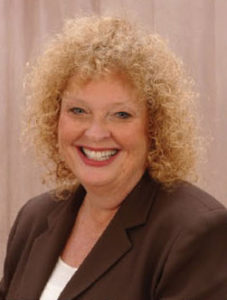 Lorie Heitzer is our Financial Associate at Gleba & Associates, Inc., where she has been a valuable employee for more than a decade! In her current role, Lorie assists with client reviews, implements client financial planning, and handles preparation of investment paperwork. During her time with Gleba & Associates, Lorie has earned her Series 6 (Investment Company Variable Contracts Representative), 63 (Uniform Securities Agent) and Life Insurance Licenses, allowing her to move into her current role where she assists clients in both of these areas. Lorie and her husband Bill, along with their daughters Lauren and Alexandria, and sons-in-law, Andrew & Joe, enjoy golf and make it a family event whenever possible. Her tenure at Gleba & Associates speaks volumes to her passion for the firm’s family atmosphere and her dedication to our clients and their financial and insurance needs.
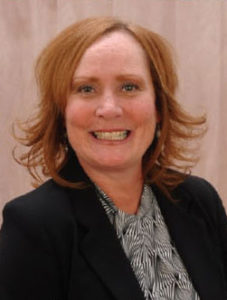 Terri is the Service Manager at Gleba & Associates, Inc., Joining the team in April, 2015. In her role, she handles client service requests and underwriting. Terri’s previous experience in 401(k) Retirement Plans, Payroll and Human Resource Administration is invaluable, allowing Gleba & Associates to grow and run efficiently. This is knowledge that can also assist our small business clients as they grow their businesses. Terri enjoys spending time with family, which includes her husband, Gerry and her two children, Vincent and Genna. She loves the outdoors and camping with family in their RV. Terri looks forward to continuing the high level of customer service you have come to expect from Gleba & Associates!
 Michael is the Marketing Manager at Gleba & Associates, Inc., where he began in August 2017. In his position, Michael creates and develops marketing strategies to enhance the image of Gleba & Associates, and helps maximize the Client-Advisor relationship. He is also in charge of company events, seminars, and educational workshops. Michael has a Bachelor of Applied Arts Degree in Integrative Public Relations from Central Michigan University. When he is not in the office, Michael can most likely be found playing billiards, playing poker, on the tennis court, or rooting on the Utica Unicorns baseball team. Michael stays active by going to the gym and going to the dog park with his Labrador-mix, Milton. His approachable attitude, along with experience in marketing, communications, and social media, makes him a valuable asset to the Gleba & Associates team.
 Moiz is our Financial Associate at Gleba & Associates, Inc., where he began in 2013 after working for Bank of America and Thomson Reuters in various financial roles. In his position, Moiz assists in the research of financial solutions in order to meet client’s needs, conducts client reviews, provides insurance quotes, offers detailed financial plans, and delivers follow-up services to our clients. Before moving to the United States in 2004, Moiz grew up in rural India, where he was raised in a family of entrepreneurs. This allowed him to quickly learn the value of financial investment. Moiz holds a Bachelor of Commerce Degree in Accounting from Gujrat University and a B.B.A. in Management and an MBA from Walsh College of Accountancy and Business Administration, where he was elected as a member of Delta Mu Delta, the International Honor Society in Business Administration in recognition of high scholastic attainment. Moiz enjoys spending time with his wife, Tasneem, son, Taha, and family. He also loves playing tennis and rebuilding computers. His expertise in the areas of banking, mortgage and taxation helps to provide our clients with distinct portfolio advice as well as overall financial direction and growth.