

HSAs get hailed as a boon to retirement savers, offering rare triple-tax advantage status to dollars deposited within. But these accounts, offered in tandem with high-deductible health insurance coverage, are far more versatile than they get credit for.
Typically thought of and discussed primarily as a way to help clients meet medical bills today or in their future retirement, HSAs can provide assistance beyond this narrow scope:
• Pay Medicare premiums
• Pay COBRA premiums
• Use for long-term care
• Use for non-medical expenses
— all without jeopardizing that special tax treatment!
Medicare and COBRA premiums
Once clients enroll in Medicare, they can no longer contribute to their HSA; however, HSA funds can pay for Medicare Parts A, B and D as well as copays for Part D. Medicare HMO, Medicare Advantage, and MAPD plan premiums are also eligible expenses for reimbursement. HSAs cannot help with Medicare Supplement Plan or Medigap premiums, says Paul Fronstin, director of the Employee Benefit Research Institute’s health research and education program.
Married couples may run into trouble when they go to reimburse themselves for such premium expenses if the account owner isn’t also the spouse who is going onto Medicare or they are not yet 65, While HSA’s can normally be used to pay expenses incurred by the account owner’s spouse or dependent, Medicare premiums aren’t considered an eligible expense unless the account holder is 65. This means couples with any age gap need to consider whose name the HSA should be under or each open their own HSA so that the older partner doesn’t have to wait until the younger turns 65 to take advantage of this rule. (Opening two separate HSAs will also allow clients age 55 or older to make duel $1,000 catch-up contributions on top of the usual annual limits.)
Clients who reach Medicare age but opt to delay enrolling because they’re still working can also use their HSA money to pay for their employer-sponsored health care as well as continue funding an HSA. They can do this even if their spouse is on Medicare, as long as they’re on a HDHP.
Long-term care
HSA funds can be used to cover premiums for purchasing long-term care insurance — if it’s the right policy.
To qualify, a policy must provide coverage for only long-term care services and kick in if you need assistance with at least two daily living activities or if you suffer cognitive impairment.
If your client is unsure, have them verify with their insurer that their policy is tax-qualified before considering such a move or else they could be on the hook for income tax and a penalty.
The amount a client can take from the HSA to pay the premium depends on their age.
For 2019:
40 or younger = $420 annually to pay this expense
41 and 50 = $790
51 and 60 = $1,580
61 to 70 = $4,220
71+ = $5,270
(The IRS has not released the limits for 2020, but they usually rise slightly each year. Ramthun expects the new figures will be out in January.)
Alternatively, clients who do purchase long-term care insurance but pay premiums out of their own pocket each year can save those receipts and then withdraw a sum equal to that annual permitted outlay at any time in the future.
Those who would prefer to go without insurance and self-fund possible long-term care costs can tap HSA assets to pay for such expenses as they occur, allowing them to better take advantage of the potential tax-free growth that comes with saving in an HSA. However, not all long-term care costs are reimbursable.
Typically long-term services that are needed to handle daily functions if you’re chronically ill or disabled count, as do those required by a plan of care prescribed by a doctor. But those who require help with more maintenance tasks like laundry or cleaning to stay in their home can’t usually use HSA funds as they aren’t considered a medical service. Nursing home costs can also be tricky for this reason as certain medical care or assistance provided at the facility may be eligible for reimbursement but other associated expenses, like room and board or meals, often are not, even at the highest level of dependent care.
Non-medical expenses
While clients may have the best intentions to save their HSA funds for future medical expenses in retirement, a year like 2020 can derail such plans. If someone needs additional funds, for, say, living expenses after a job loss or an unexpected car repair, they can withdraw funds from their HSA without triggering taxes or a penalty. The catch? They must have unreimbursed past healthcare expenses.
As long as the client had an open HSA when they incurred the medical expense and hasn’t yet tapped it to cover that cost, an amount equal to that bill can be withdrawn at any time and used for any purpose they want. Clients can claim back funds for expenses dating all the way back to 2004, when HSAs were first introduced, provided they had an account. Receipts should be on hand to prove their story in case the IRS comes checking.
One thing that can trip up clients planning to use this feature is a low or empty current HSA balance. That’s because if the account balance remains at zero for 18 months, the IRS considers the HSA closed and any medical expenses you incurred before that time will no longer be reimbursable, even if you open and fund a new HSA. They essentially lose that original HSA establishment date.
At age 65, withdrawals no longer need to be paired with a medical expense to avoid that 20% tax penalty. Income tax, however, will still be owed on any funds removed for non-healthcare expenses, similar to how distributions from a traditional IRA or 401(k) are treated.





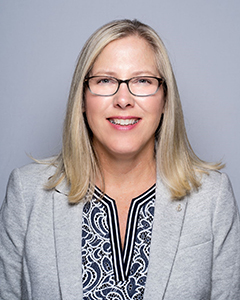 Invest Well. Manage Well. Live Well.
 Gary is a Financial Associate at Gleba & Associates, Inc., joining our team in June 2020. After graduating from Walsh College with a Bachelor’s Degree in Finance in 2013, he began his career at Raymond James Financial Services. He then moved to the world of banking, working as a banker with Chase Private Client and then as an Assistant Vice President, Financial Advisor with PNC Investments. Gary has expertise in all aspects of financial planning including investment management, higher education planning, life insurance, and long-term care insurance needs analysis. When he gets away from the office, he loves to spend time with his wife, Lauren, and two daughters, Hadley and Harper. He enjoys woodworking, boating, summer weekends at the family cottage, spending time outdoors and traveling.
 Conor is a Financial Associate at Gleba & Associates, Inc., where he started in 2018. Conor has prior experience in the financial planning industry, as well as in the insurance industry. His high level of understanding insurance and financial products helps him in assessing the needs of our clients. He holds a Bachelor of Science degree in Business Administration with a concentration in Finance from the University of Detroit Mercy. You can often find Conor playing soccer or walking with his two dogs Milo, and Ellie. He is also an avid follower of the Detroit Tigers, Detroit Red Wings and his alma mater, the University of Detroit Mercy Titans.
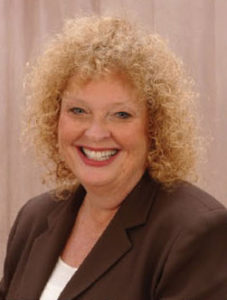 Lorie Heitzer is our Financial Associate at Gleba & Associates, Inc., where she has been a valuable employee for more than a decade! In her current role, Lorie assists with client reviews, implements client financial planning, and handles preparation of investment paperwork. During her time with Gleba & Associates, Lorie has earned her Series 6 (Investment Company Variable Contracts Representative), 63 (Uniform Securities Agent) and Life Insurance Licenses, allowing her to move into her current role where she assists clients in both of these areas. Lorie and her husband Bill, along with their daughters Lauren and Alexandria, and sons-in-law, Andrew & Joe, enjoy golf and make it a family event whenever possible. Her tenure at Gleba & Associates speaks volumes to her passion for the firm’s family atmosphere and her dedication to our clients and their financial and insurance needs.
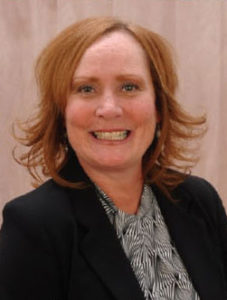 Terri is the Service Manager at Gleba & Associates, Inc., Joining the team in April, 2015. In her role, she handles client service requests and underwriting. Terri’s previous experience in 401(k) Retirement Plans, Payroll and Human Resource Administration is invaluable, allowing Gleba & Associates to grow and run efficiently. This is knowledge that can also assist our small business clients as they grow their businesses. Terri enjoys spending time with family, which includes her husband, Gerry and her two children, Vincent and Genna. She loves the outdoors and camping with family in their RV. Terri looks forward to continuing the high level of customer service you have come to expect from Gleba & Associates!
 Michael is the Marketing Manager at Gleba & Associates, Inc., where he began in August 2017. In his position, Michael creates and develops marketing strategies to enhance the image of Gleba & Associates, and helps maximize the Client-Advisor relationship. He is also in charge of company events, seminars, and educational workshops. Michael has a Bachelor of Applied Arts Degree in Integrative Public Relations from Central Michigan University. When he is not in the office, Michael can most likely be found playing billiards, playing poker, on the tennis court, or rooting on the Utica Unicorns baseball team. Michael stays active by going to the gym and going to the dog park with his Labrador-mix, Milton. His approachable attitude, along with experience in marketing, communications, and social media, makes him a valuable asset to the Gleba & Associates team.
 Moiz is our Financial Associate at Gleba & Associates, Inc., where he began in 2013 after working for Bank of America and Thomson Reuters in various financial roles. In his position, Moiz assists in the research of financial solutions in order to meet client’s needs, conducts client reviews, provides insurance quotes, offers detailed financial plans, and delivers follow-up services to our clients. Before moving to the United States in 2004, Moiz grew up in rural India, where he was raised in a family of entrepreneurs. This allowed him to quickly learn the value of financial investment. Moiz holds a Bachelor of Commerce Degree in Accounting from Gujrat University and a B.B.A. in Management and an MBA from Walsh College of Accountancy and Business Administration, where he was elected as a member of Delta Mu Delta, the International Honor Society in Business Administration in recognition of high scholastic attainment. Moiz enjoys spending time with his wife, Tasneem, son, Taha, and family. He also loves playing tennis and rebuilding computers. His expertise in the areas of banking, mortgage and taxation helps to provide our clients with distinct portfolio advice as well as overall financial direction and growth.